
Lecturers
Lecturers
BLAŽENKA KOS
Circular economy in dairy sector – new biotechnological processes development
Dr. Blaženka Kos, PhD, is a Full Professor with tenure at the Faculty of Food Technology and Biotechnology, University of Zagreb (UNIZG FTFB). She graduated in 1992, obtained her MSc degree in 1996, and earned her PhD in 2001 under the supervision of Professor Jagoda Šušković, PhD, at UNIZG FTFB. She is actively involved in the education of undergraduate, graduate, specialist, and doctoral students at UNIZG FTFB, as well as in the international undergraduate programme “Blue Economy and Growth” (EU-CONEXUS Minor) and the graduate programme “Molecular and Industrial Biotechnology” at the University of Insubria, Italy. As a researcher and principal investigator on numerous projects, including collaborations with industry and projects within the Center of Excellence for Marine Bioprospecting of the Adriatic Sea, she has co-authored original scientific papers cited more than 2,500 times in the Web of Science, with an h-index of 25. She is a member and Head of the Department of Bioprocess Engineering of the Croatian Academy of Engineering. Professor Kos is the recipient of the Annual State Award for Science of the Republic of Croatia (2017), along with several other awards recognizing her contributions to research on the mechanisms and modulation of the host gut microbiota, the biotechnological production and application of probiotics and postbiotics, and their potential as pharmacobiotics.

KATARINA LISAK JAKOPOVIĆ
Next-generation dairy products
Associate Professor Katarina Lisak Jakopović, PhD, graduated in 2008 from the Faculty of Food Technology and Biotechnology, University of Zagreb, with a degree in Food Engineering, and in 2009 completed an additional degree in Nutrition at the same faculty. Since April 2009, she has been employed at the Laboratory for Milk and Dairy Technology, where she has served as Head of the Laboratory since 2021. She obtained her PhD degree in 2013. She teaches lectures and practical courses in dairy science and technology at both undergraduate and graduate levels. She spent one year in professional training at the Technical University of Munich and was awarded a scholarship by the German Academic Exchange Service (DAAD). She is the recipient of two Dean’s Awards: one for being the best student of her generation and another for a published scientific paper. In addition, she received two awards from the Faculty of Food Technology and Biotechnology: the 2023 Award for Science Popularization and the 2025 Award for Excellence in Teaching. Since December 2017, she has been a member of the editorial board of the scientific journal Mljekarstvo and of two international scientific journals, and since 2025 she has served as Executive Editor of the Croatian Journal of Food Technology, Biotechnology and Nutrition. As a co-author, she has published the university textbook Types of Milk, two chapters in scientific books, and four popular science books. Her recent research activities focus on the development of innovative and functional dairy products.

BORIS LUKIĆ
Precision Livestock Farming in practice: Integrating genomics, biometric sensors and environmental data for sustainable dairy production
Boris Lukić is an Associate Professor at the Faculty of Agrobiotechnical Sciences in Osijek, Croatia. As a top-performing student, he completed research internships at the National Agricultural Research Centre (FAL Braunschweig) in Germany and the AgroTak Group cattle farm in Poland. In 2006, he received the Rector’s Award for academic excellence and graduated in 2009 with a degree in Animal Science. He earned his PhD in 2015, conducting research at the Roslin Institute, University of Edinburgh, on genomic selection in pigs. Throughout his academic career, he has attended advanced courses in statistics and genomics and contributed as a research associate to numerous projects funded by the Croatian Ministry of Science, the Croatian Science Foundation, Horizon 2020, and the Paying Agency for Agriculture, Fisheries, and Rural Development (PAAFRD). Currently, he leads a large EU project integrating genomic data with AI-driven sensor technology and manages two national scientific projects while collaborating on two others. Appointed Associate Professor in 2022, he teaches undergraduate and graduate courses in quantitative genetics, selection, and animal breeding programmes. His research focuses on livestock genetics and genomics, as well as improving local breeds through advanced genomic approaches.

ANTE KASAP
Integration of genomics into national breeding programmes for dairy small ruminant breeds
Ante Kasap is an Associate Professor at the Faculty of Agriculture, University of Zagreb, where he serves as an educator and researcher in animal science. He coordinates and delivers a comprehensive range of undergraduate, graduate, and postgraduate courses, with a specialized focus on Livestock Farming, Quantitative Genetics, and the design of Animal Breeding Programs. His academic work is particularly centered on the genetic advancement and sustainability of small ruminant production systems. Throughout his career, Dr. Kasap has distinguished himself through his expertise in genomic characterization and the strategic integration of genomic selection into traditional breeding frameworks. His research is at the forefront of modernizing livestock management, utilizing advanced statistical models to bridge the gap between laboratory findings and farm-level application. He has played a pivotal role in numerous high-impact national and international research projects, securing funding from prestigious bodies such as the Croatian Science Foundation (HRZZ), the Ministry of Science and Education, and the European Union’s HORIZON programs. Beyond the genetic improvement of small ruminant populations for economically important traits, a key pillar of Dr. Kasap’s work is the preservation of biodiversity. He is widely recognized for his contributions to the conservation and selection strategies of indigenous Croatian breeds, including the Istrian and Pag sheep, and the Istrian goat. By focusing on these unique genetic resources, his work ensures both the cultural heritage and economic viability of regional farming. Dr. Kasap is a prominent figure in the global scientific community and a regular contributor to premier international forums. His research is frequently presented at leading global congresses, including the European Federation of Animal Science (EAAP) annual meetings, the International Committee for Animal Recording (ICAR), and the World Congress on Genetics Applied to Livestock Production (WCGALP). Complementing his academic leadership, he has made significant contributions to the professional sector as an influential author of technical manuals, providing essential, evidence-based guidance for the modern sheep and goat breeding industry.
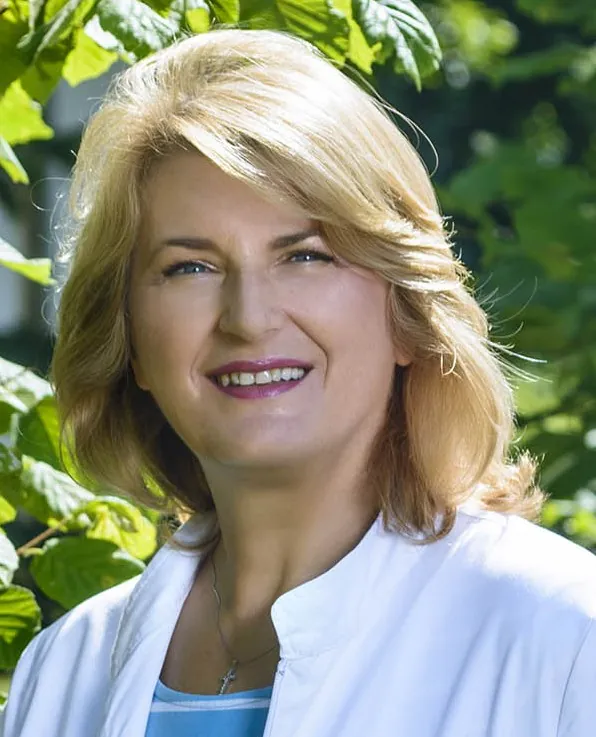
EVA PAVIĆ
Milk, dairy proteins and collagen in maintaining functional capacity during aging

IVA DOLENČIĆ ŠPEHAR
Non-frozen dairy-based desserts in the context of a healthy diet
Iva Dolenčić Špehar is an associate professor at the University of Zagreb, Faculty of Agriculture. She obtained a degree in agronomy from the same institution in 2004 and a doctorate in biotechnical sciences in 2014. In her scientific and teaching work, she is involved in undergraduate, graduate, and postgraduate studies, with a focus on the technology of producing fermented milk, cream, butter, and dairy-based desserts. She has participated in several projects, among which stand out, Innovative Dairy Cow Feeding Strategies for Improving the Nutritional and Processing Properties of Milk, Urban and Peri-Urban Agriculture for Climate Resilience and Food Security, Potential of Microencapsulation in Cheese Production, and Elements of Organic Production and Analytical Methods for Proving the Authenticity of Cheese. She actively collaborates with industry through projects aimed at improving dairy product technology and implementing sensory analysis and quality evaluation of dairy products to optimise production processes and develop innovative products. She currently serves as Head of the Department of Dairy Science at the Faculty of Agriculture, University of Zagreb.

NEMANJA KLJAJEVIĆ
AI-assisted prediction of process kinetics and product characteristics for dairy fermentation consortium selection
Nemanja Kljajević, PhD in Food Science and Technology, is a Research Associate in the Group for Molecular Microbiology (Department of Microbiology and Plant Biology) at the Institute of Molecular Genetics and Genetic Engineering (IMGGE) in Belgrade. He graduated in 2010 and earned his PhD from the Faculty of Agriculture, University of Belgrade, with a doctoral thesis focused on dairy technology. His areas of interest include food microbiology, milk technology, statistical analysis, and the application of artificial intelligence in fermentation processes. Within the laboratory, he dedicates significant effort to statistical data processing and the development of predictive models. Over the past year, he has focused on predictive modeling of starter culture functionality using global epistasis, which will be the central topic of his plenary lecture. Throughout his career, he has gained more than ten years of hands‑on experience in the dairy industry, holding responsible positions in the production of cheese, fresh cheese, and fermented products, including roles as production manager in dairy processing plants. In his plenary lecture titled “AI-assisted prediction of process kinetics and product characteristics for dairy fermentation consortium selection”, he will present an overview of current AI/ML tools in dairying, a comparison with classical statistical methods (RSM, fractional factorial design), and a detailed presentation of the global epistasis approach, which enables the prediction of thousands of untested strain combinations from just a few hundred experiments.
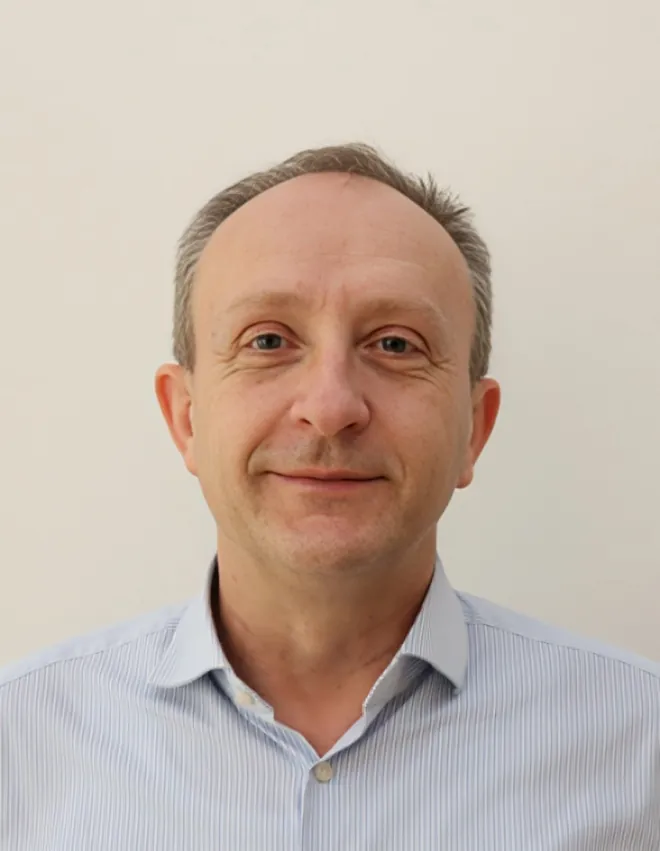
ANTE IVANKOVIĆ
Challenges of Croatian Dairy Cattle Farming: Technological-Innovative and Economic Perspectives
Ante Ivanković is a Full Professor at the Faculty of Agriculture, University of Zagreb, where he has been engaged in teaching and research for more than three decades. He graduated in 1994, obtained his M.Sc. degree in 1997, and earned his Ph.D. in 2021 from the Biotechnical Faculty, University of Ljubljana with a dissertation focusing on the application of molecular genetics in animal production. In addition to teaching courses related to cattle production technologies at the undergraduate, graduate, and doctoral levels, he contributes to courses covering horse breeding and utilization, food safety, and related subjects. For more than twenty years, he has served as the national coordinator for the conservation of farm animal genetic resources, actively contributing to the development of strategies for their sustainable management and preservation. Professor Ivanković has participated in the design and development of national cattle breeding programmes and regularly contributes to national conferences and advisory meetings for cattle breeders. He has published more than fifty scientific papers in international peer-reviewed journals, presented at over two hundred scientific and professional conferences, and led several research projects. As a project partner and collaborator, he has been involved in numerous international initiatives, including PRIMA, IPA, INTERREG, ERASMUS, and others. He is the author or co-author of six university textbooks and manuals. The most recent, Cattle Production (Govedarstvo), was published in 2020 with the objective of providing students with a comprehensive and integrated teaching resource. Cattle production, including dairy farming and milk production, constitutes the central focus of his academic, teaching, and research activities.

KREŠIMIR KUTEROVAC
Understanding dairy production through thirty years of climate and milk recording data
Krešimir Kuterovac, MSc in Agricultural Engineering, is an expert in livestock production and dairy farming with more than 35 years of professional experience in milk production, management of large-scale livestock systems, milk quality control, breeding programs, and agricultural sector development. He holds a degree in Agronomy, specializing in Livestock Production, from the Faculty of Agriculture, University of Zagreb. Throughout his professional career, he has held a number of senior positions in government institutions and large agricultural systems. He served as Director of the Croatian Livestock Centre, State Secretary at the Ministry of Agriculture, and Executive Director for Livestock and Agriculture within the Agrokor system. Since 2026, he has served as Deputy Director of the Croatian Agency for Agriculture and Food (HAPIH). A significant part of his professional career has been dedicated to the development of the Croatian milk control and quality assurance system. As Director of the Croatian Livestock Centre, he was involved in establishing and developing the Central System for the Control of Raw Milk in the Republic of Croatia, the milk yield recording system, and national information systems in livestock production. He also led the accreditation processes of the Central Laboratory for Milk Control according to the ISO 17025 standard, as well as the certification of milk yield recording in accordance with ICAR standards. His experience also includes the direct management of large-scale milk production systems, including farms with more than 2,000 dairy cows and an annual milk production of approximately 20 million litres. Kuterovac is the author and co-author of more than 50 scientific and professional papers and has participated in numerous national and international scientific and professional conferences. His scientific and professional interests include milk production and quality, milk yield recording, lactation curves, the nutritional status of dairy cows, udder health and somatic cell counts, as well as the impact of climatic factors – particularly heat stress – on milk production. His longstanding collaboration with scientists in the field of animal production has resulted in research linking long-term milk production and milk recording data with environmental and production-related factors. His experience brings together three decades of developments in the Croatian dairy sector, systematic collection of data on milk production and quality, and research into the impact of climatic conditions on dairy cow performance. This extensive experience forms the foundation of his plenary lecture, “Understanding Dairy Production through Thirty Years of Climate and Milk Recording Data,” in which he connects data collected over several decades with changes in milk production and climatic conditions.